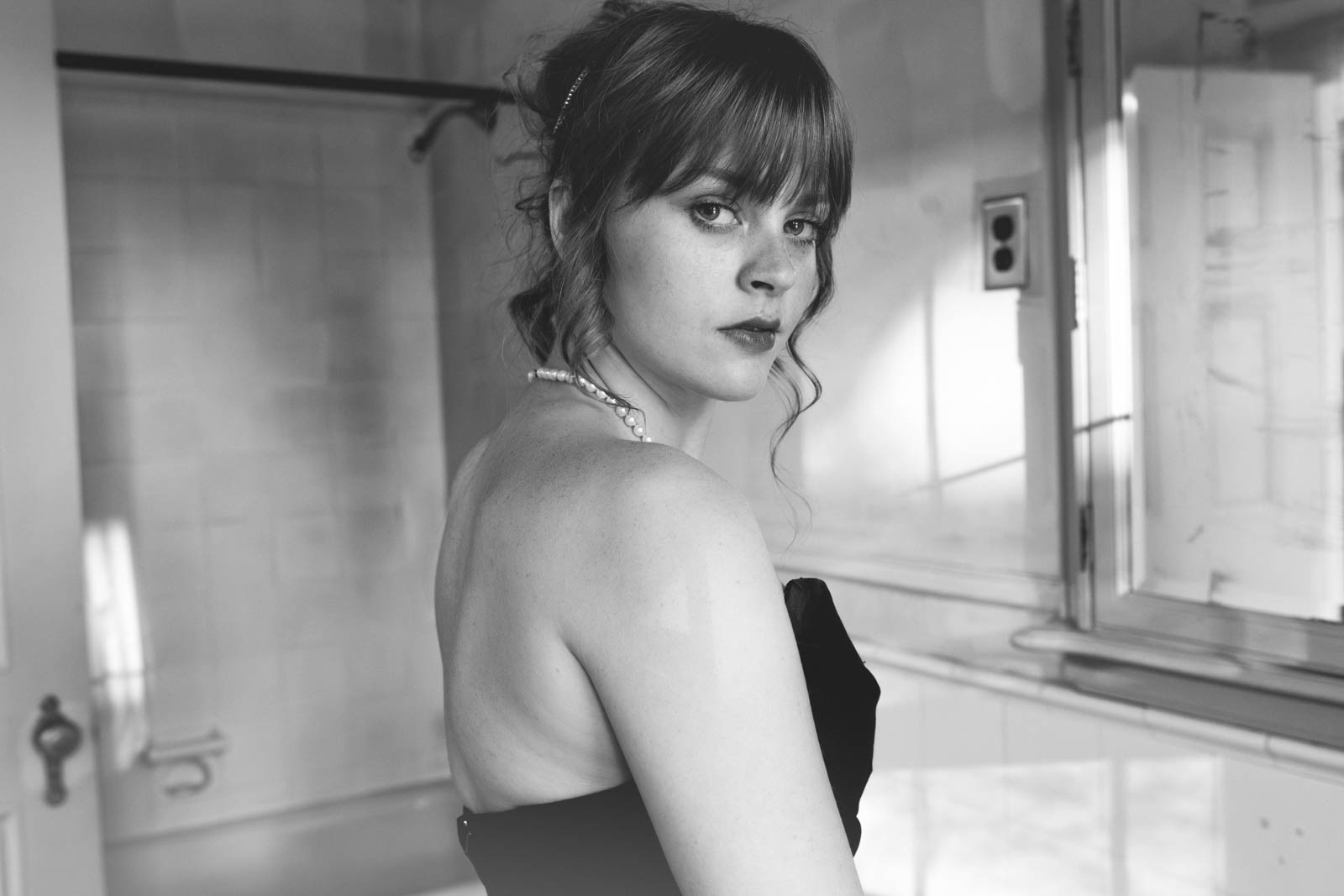
Every photograph has a story...
Blue Dress in a White Box
One of the things I've come to appreciate shooting portraits is that while the subject is obviously the central character of the photograph, the world around them can have an enormous influence on the story the image tells. Over time, I've developed a sort of second sense when looking through the viewfinder, paying attention not only to the person in front of me but also to the lines, shapes, colors, and environmental elements surrounding them. Changing what the camera sees—even slightly—can dramatically change the character of a portrait. The surroundings don't have to compete with the subject to be meaningful; sometimes their role is to give the subject a place to exist within the photograph. This is a portrait I captured earlier this year, working with Nikki, an incredibly talented model and actress from the Chicago area, and I think this photograph illustrates that idea particularly well.
We were shooting at an old 1920's Estate in Oak Brook and came across an unfinished room undergoing renovation. The room had these exposed white closets with slightly distressed, aged wood panels. With the doors and closet rod long gone, what remained was essentially a simple architectural frame set into the wall. Nikki came dressed in this elegant, electric blue dress. We decided to have her pose in the closet. I wanted to capture an image that wasn't simply saying to the viewer “Here's a woman wearing a beautiful blue dress," but that clearly says “Here's a woman wearing a beautiful blue dress inside this particular architectural space.” The space is part of the photograph's identity and the way Nikki interacts with that space is as important to the image as Nikki herself.
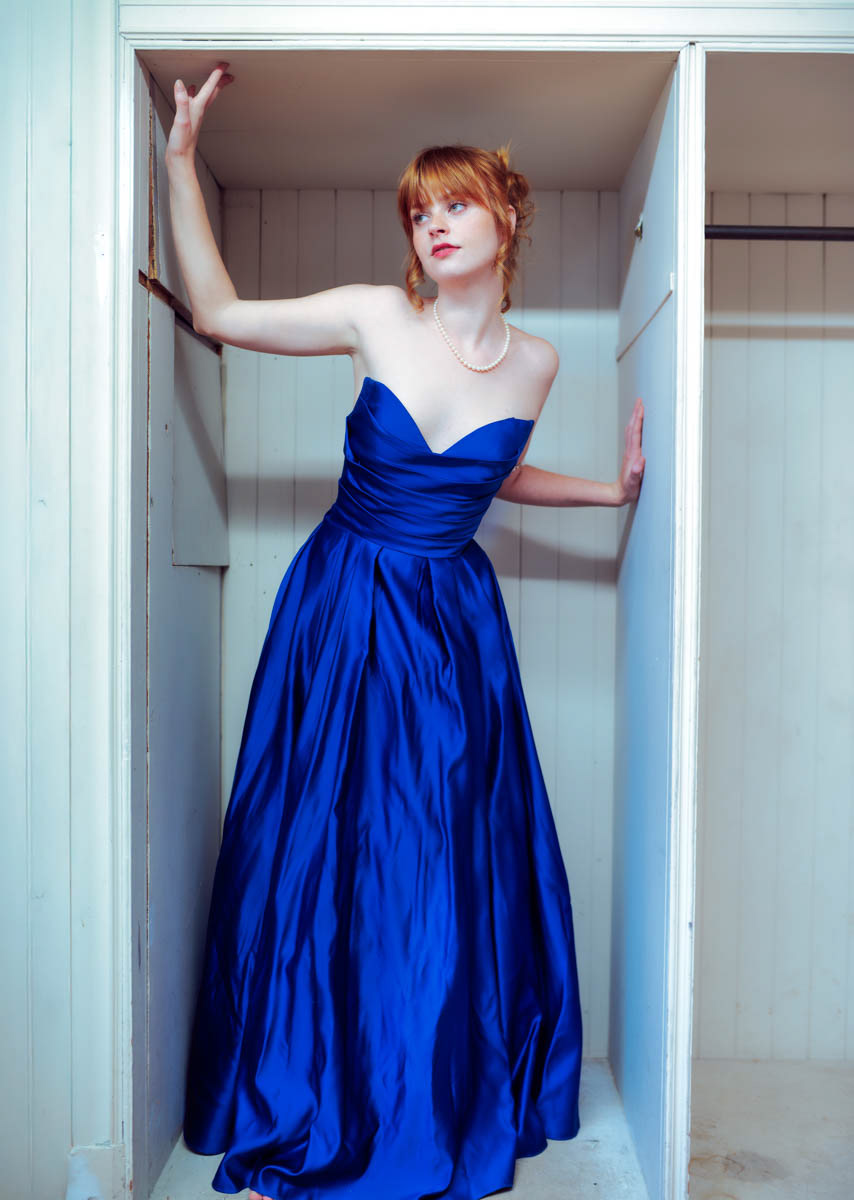
I chose the Sigma 35mm prime lens. While a longer portrait lens would have made it easier to isolate Nikki, that would have changed the relationship between her and the space around her. The 35mm allowed me to get close enough to make her the clear subject while still showing the full geometry of the closet. Because I am relatively close to the subject, the perspective gives a sense of physical presence while still allowing the surrounding architecture to remain visible. Nikki isn't simply placed inside a frame from a distance; the photograph feels as though the viewer is standing there with her, looking into that small space

That perspective also emphasizes the geometry of the space. The closet creates a very rigid geometric structure, with its strong vertical and horizontal lines. But Nikki's pose introduces something much more organic into that structure. Her arms extend toward the boundaries of the opening, while the lines of her body and the flowing shape of the dress create curves and diagonals against the straight lines of the architecture. The architecture provides the structure of the photograph, while the pose gives it movement, pushing against the boundaries of the frame.
The colors here also are critical to what makes this image stand out to me. The deep blue of the dress against the pale, neutral architecture gives the dress enormous visual weight. It gives the image a strong center of gravity and provides a saturated field of color against the much quieter surroundings. Nikki's copper-colored hair, warm skin tones, and red lips provide a strong color contrast that introduces warmth against the much cooler blue of the dress and the pale, cool tones of the room. The blue dress ties her visually to the cool environment while the warmer tones of her face and hair bring the portrait to life.
Together, the framing and the color give the photograph structure. The architecture contains the figure. Nikki's pose responds to that frame. The 35mm perspective keeps the environment present. And the blue dress provides the color that draws everything together; the color tells us where to look within the space. If any one of those elements were removed, the photograph would become something different.